


Most moms do not need another task on the list. What they need is ten quiet minutes that actually feel like a break. That is where painting comes in. Not the kind that requires a studio, an easel, or any natural talent, but the simple, forgiving kind you can do at the kitchen table while the kettle boils. Watercolor has quietly become one of the most popular ways for parents to unwind, and the reasons are easy to see. It is cheap to start, easy to put away, and almost impossible to ruin. Here is why it fits busy mom life so well, and how to begin without overthinking a single thing.
A hobby that fits around your life, not the other way round
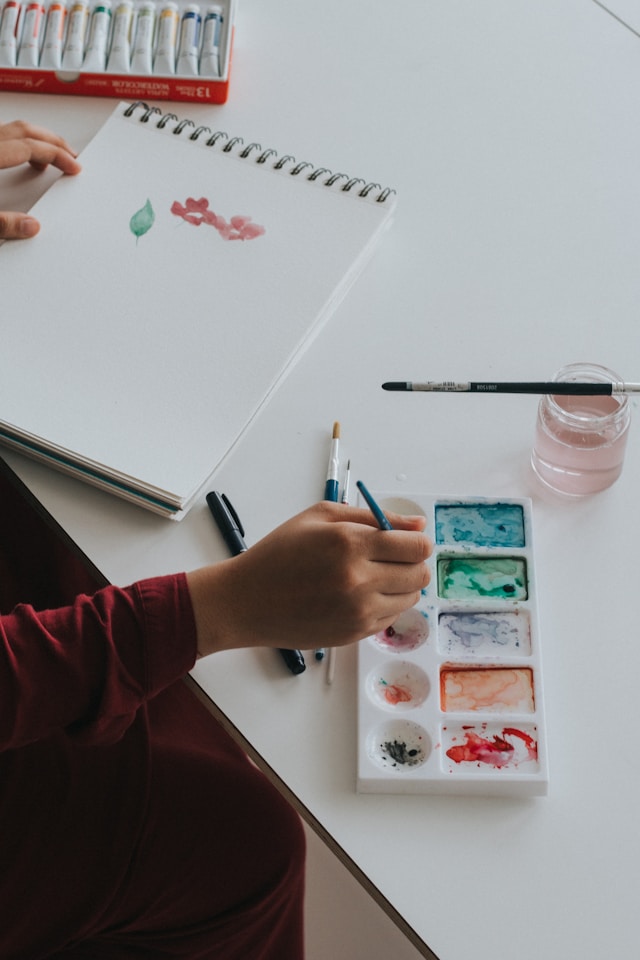
The biggest myth about creative hobbies is that you need a big block of free time. Watercolor is the opposite. You can paint one small shape in five minutes and come back to it tomorrow. There is no setup ritual, no drying room, and no expensive cleanup. A small palette, a brush, and a sheet of paper are enough to get going. When your supplies live in a kitchen drawer instead of a dedicated craft room, you actually use them. That is the difference between a hobby you keep and one that turns into guilt in a cupboard. For moms whose free time arrives in unpredictable ten-minute windows, that flexibility is the whole point. You are never behind, because there is nothing to catch up on, and you can stop the second you are needed again.
Why painting calms the nervous system
There is a real reason painting feels soothing. Slow, repetitive, low-stakes activity gives your mind something gentle to settle on, which quiets the mental noise that piles up over a long day. Watching color spread across wet paper is slow and a little hypnotic, and because there is no scoreboard, there is no pressure to perform. You are not trying to make a masterpiece. You are moving a brush and watching what the water does. Many parents describe it the way others describe a walk or a warm bath. It is one of the few activities that asks almost nothing of you while still giving something back, which feels rare when so much of parenting is pure output. Even a short session can shift your mood, because your hands are busy and your thoughts finally get to slow down for a while.
Start small so you actually keep going
The fastest way to quit a new hobby is to buy too much and expect too much. You do not need eighty colors or fancy paper. You need a small, balanced set and a low bar for what counts as a good session. This is exactly where a structured starting point helps. Instead of facing a blank page and freezing, you follow simple prompts that build your confidence one page at a time. Tobio’s guided watercolor workbooks made for beginners work a little like a coloring book for grown-ups, giving you light outlines and gentle exercises so you can practice brush control and color mixing without staring at empty paper. When the first few wins come easily, you keep showing up, and showing up is the entire game with any creative habit.
It is screen-free time your kids will want to copy
There is a quiet bonus to painting at the table. Kids notice. When they see you doing something calm and creative with your hands, they want in, and suddenly you have a shared activity that does not involve a tablet. You do not have to turn it into a lesson or a craft project with a perfect result. Set them up with their own paper and let them splash around while you do your thing beside them. It models something powerful, that downtime can be creative instead of passive, and that making something imperfect is completely fine. Some of the best family moments are the unplanned ones that happen side by side rather than face to face, and a shared paint session creates them without any effort or planning at all.
What to paint when you have no idea
A blank page can be the hardest part, so keep a short mental list of easy subjects you can reach for. A single piece of fruit from the bowl is a classic, because you only have to capture one shape and one or two colors. A loose wash of sky needs no drawing at all, just bands of color blending into each other. A leaf, a flower from the garden, or the view from your window all work beautifully. You can also simply play with color, painting stripes and circles to see how the shades mix and fade. None of these have a right answer, which is the point. The goal is to keep your hand moving and your mind quiet, not to produce something frame-worthy on day one.
A few tips to make it stick
Keep your supplies somewhere visible and easy to grab, because out of sight really does mean out of mind. Lower the bar by deciding that a five-minute session counts as a win. Try not to compare your early pages to the polished art you scroll past online, since most of that took years of practice to reach.
Pick simple subjects to begin with, and give yourself full permission to make ugly paintings, because that is honestly how everyone learns. Progress in watercolor is not about talent. It is about showing up often enough that your hands start to understand what the water and the pigment want to do together.
You do not need more time, more talent, or more space to put a little creativity back into your week. You need something small, forgiving, and easy to reach for on a hard day. Watercolor checks all three boxes, which is why so many parents quietly fall for it. Start with a few colors, a simple guide, and zero expectations, and let those ten quiet minutes become the part of the day that belongs only to you.











Add Your Comment