


Your kid is playing superheroes, running across the living room like crazy. 2 seconds later, they’re face down on the rug. Later that same afternoon, they’re carrying a cup of juice in both hands and concentrating so hard, you’d think they were a surgeon. Sadly, that juice still ends up all over their shirt and floor because, well… They’ve spilled all of it.
It’s kinda funny when you imagine scenes like this in your mind, but if this happens often, you can’t help but wonder why your kid is so clumsy.
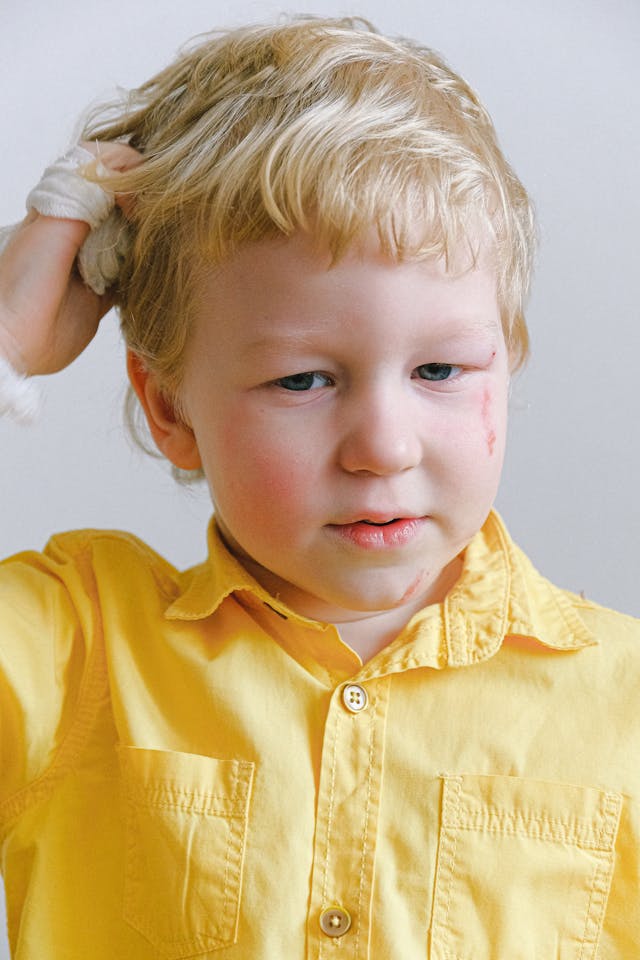
Eh, kids will be kids.
That’s what you say to yourself. But actually, science has something to say about this, and it’s not just bad luck. Their little brains and bodies are still not 100% wired together, and they’re learning how to balance and judge space.
Those funny little missteps can teach you something important about how they grow and about how you see the world around you.
Why Kids Seem Clumsier Than Adults
Kids aren’t born with perfectly tuned coordination, as every parent knows. It takes years for their bodies and brains to figure it all out.
Motor skills develop slowly, which means their muscles and nervous system are still practicing how to work together. The signals that travel between the brain and body also aren’t as fast as in adults, so even when they know what they want to do, their movements can come out a little late or a little shaky.
Then there’s balance. As they grow taller, their center of gravity shifts, so it’s harder for them to stay steady on their feet until their bodies catch up. This is why, if your kid goes through a growth spurt, it will make them even clumsier for some time. Their brain needs time to adjust to the new size of their limbs.
We adults forget how long it takes to master things like running and jumping, but the truth is, clumsiness is just part of the process.
The Science Behind Clumsiness
Clumsiness isn’t some random bad luck.
There are real biological and environmental reasons why kids stumble and crash into things all the time, so let’s take a look.
Brain Development and Coordination
A big part of coordination lives in the cerebellum, which is the section of the brain that fine-tunes movement and balance.
This is still developing in children, and it doesn’t stop developing until well into adolescence, meaning that being able to control smooth, precise actions is a work in progress.
Balance and Proprioception
Balance isn’t just about’standing upright’; it relies on a system called proprioception.
It’s the ability of the body to sense where it is in space. You and I don’t even think about it because we’re well-developed. Kids, on the other hand, are still immature in this regard, which is why they often misjudge a step or miscalculate how far away the chair is.
This is why you’ll see them slipping on stairs a lot and why gym floors are a risk of sliding. And living room furniture? Well, that always seems to be in their way somehow.
Environmental Influences
Even when they’re really doing their best, the world around them doesn’t always make it easy. Most environments are designed for adults, whether that’s school or your house. Tables are higher, they can’t reach the door handles, bathroom floors are too slick, stairs are too tall… It can be hard for them. And if you add to that overstimulation from bright lights and loud noises, how can they not be thrown off their game?
Certain places crank up these risks even more.
Hospitals and malls, for example, are full of shiny floors and equipment that can be tripping hazards. It’s really no surprise that hospital slip and fall cases happen all the time – there might be random items scattered on the floor, or liquid spilled, especially since most hospitals use tiles for flooring, which, when it’s being washed, transforms into a hazard.
And what happens? Running, slipping, falling. And you pray that that’s it, and nothing worse comes out of it.
All the more reason why you should get a good lawyer who regularly deals in such cases – just in case.
Attention and Distraction
Brain development and tricky surroundings are just some of the factors.
Attention plays a big part, too. Kids don’t have the same level of executive functioning as adults, so that means they can’t multitask nearly as well. Walking while talking is harder for them to pull off, as is balancing a toy in one hand or looking around when they’re moving.
Any distraction will usually make them trip/bump. (Some) Adults can split their attention between tasks.
Kids, on the other hand – they’re still learning how to do it, so don’t expect much.
Conclusion
A simple walk from the kids’ room to the bathroom turned into a cascading chain-reaction accident. And it all started with one of the kids tripping over their untied/untucked shoelaces. Ended up with a cracked sink and a broken mirror in the bathroom.
And while most parents will start yelling because they think the kid is careless, the truth is – they’re just clumsy. And there’s a good reason for that. They’re still growing and getting used to all the changes.
To be honest, it’s adorable. And while the actual accident isn’t adorable itself, the realization that clumsiness is in play still makes it easier to deal with all that; for me, at least.










Add Your Comment