


The aesthetic medicine landscape has expanded considerably. A decade ago, the main choice was whether or not to have surgery. Now there’s an entire spectrum between doing nothing and going under the knife — injectables, lasers, radiofrequency devices, thread lifts, chemical peels — and figuring out where your specific goals fit on that spectrum can be genuinely confusing.
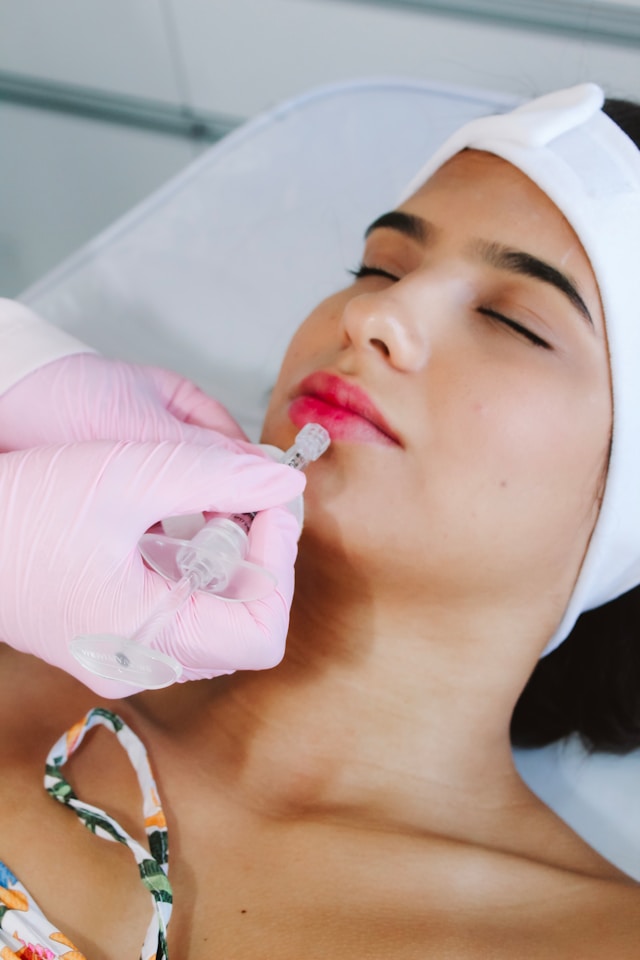
Here’s a clear-headed breakdown of how to think through the surgical vs. non-surgical decision, what each side of that choice realistically offers, and when one is genuinely the better fit over the other.
The Core Difference: What Each Can Actually Change
Non-surgical treatments work on the surface and with soft tissue. They can soften lines, add or redistribute volume, improve skin texture and tone, and create subtle lifting effects. What they can’t do is remove excess skin, reposition muscle, or make structural changes to bone or deep tissue.
Surgery can address all of those things. A facelift repositions the underlying tissue and reduces skin laxity. A rhinoplasty reshapes cartilage and bone. Eyelid surgery removes excess skin and fat. These are permanent structural changes — not achievable any other way.
The honest question isn’t “which is better?” — it’s which category your concern actually falls into.
When Non-Surgical Is the Right Answer
Non-surgical treatments are most effective for:
- Early facial aging— dynamic expression lines, mild volume loss in the cheeks or lips, early laxity that hasn’t become structural.
- Maintenance and prevention— keeping skin in good condition, extending the results of surgery, or managing gradual changes before they require a larger intervention.
- Targeted concerns— a specific line, an asymmetry that can be corrected with filler, skin texture issues that laser addresses effectively.
- Limited downtime— for people who can’t take extended time away from work or family, non-surgical options allow treatment without a recovery window.
The combination approach — Botox, fillers, and laser used strategically together — can address a surprising amount of early aging without surgery. The “liquid facelift” concept works well for patients in their 30s and 40s with the right profile of concerns.
When Surgery Is the More Honest Answer
There’s a category of patients who come in hoping non-surgical options will be enough — and sometimes they are. But for certain concerns, surgery is simply the only treatment that does what the patient is actually asking for.
Significant skin laxity — jowling that has progressed past mild, a neck that has lost meaningful definition, upper eyelid hooding that affects the visual field — responds poorly to injectables. Filling volume into a face that needs structural tightening often makes things look worse, not better. An honest provider will tell you that directly.
The same applies to body concerns. Excess skin after significant weight loss, abdominal separation after pregnancy, breast ptosis beyond a certain degree — these require surgery. Non-surgical body contouring addresses fat, not loose skin.
How the Consultation Should Actually Work
According to the American Society of Plastic Surgeons, non-surgical treatments now account for a significant and growing share of all aesthetic procedures performed annually — reflecting that more patients are starting with less invasive options and combining them strategically over time.
The best consultations don’t start with a menu of services — they start with your goals, your timeline, and what you’re realistically trying to achieve. A provider who assesses your face, explains what they see, and then maps it to specific treatment options is giving you information you can use to make a real decision.
In the Bay Area, where patients tend to be informed and research-driven, Plastic Surgery Palo Alto at Graw Beauty approaches both surgical and non-surgical options with exactly that kind of integrated assessment — helping patients understand what each path involves and which one genuinely serves their goals, rather than defaulting to one modality.
The Timeline and Commitment Question
Non-surgical results are typically temporary and require ongoing maintenance. Botox every three to four months. Fillers every 6 to 18 months, depending on the product and area. Laser series twice a year. If you’re comfortable with that cycle and the cumulative cost, it’s a legitimate approach.
Surgical results are generally permanent — or at least long-lasting enough that most patients don’t require repeat procedures for many years. The upfront cost is higher, the recovery is real, and the commitment is significant. But for the right patient, the one-time investment in a surgical result often makes more sense than indefinite maintenance spending.
Neither is wrong. The choice depends on your goals, your stage of aging, your tolerance for downtime, and what you’re actually trying to address.
A Practical Framework for Deciding
If you’re genuinely unsure, a few questions are worth sitting with before a consultation:
- Is the concern I have caused by muscle movement, volume loss, or skin/structural change?
- How much downtime am I realistically able to take if I need it?
- Am I looking for a temporary improvement that I can evaluate before committing to more, or am I ready for a longer-lasting change?
- Have I looked at before-and-after photos that show the kind of result I’m actually hoping for?
Conclusion
The surgical vs. non-surgical question doesn’t have a universal answer — it has a right answer for each specific patient with specific goals and a specific set of concerns. The best thing you can do before making any decision is have a consultation with a provider who takes both paths seriously and will tell you honestly which one serves what you’re asking for. That kind of straightforward guidance is rarer than it should be, and it’s worth seeking out before you commit to any approach.










Add Your Comment