


According to the American Association of Orthodontists’ 2023 clinical data, clear aligner therapy now accounts for over 40% of all orthodontic treatments in the United States — a dramatic shift from just 15% a decade ago. This surge isn’t simply about cosmetic preferences; it reflects fundamental changes in how adults and teens approach orthodontic care, prioritizing flexibility and discretion alongside clinical outcomes.
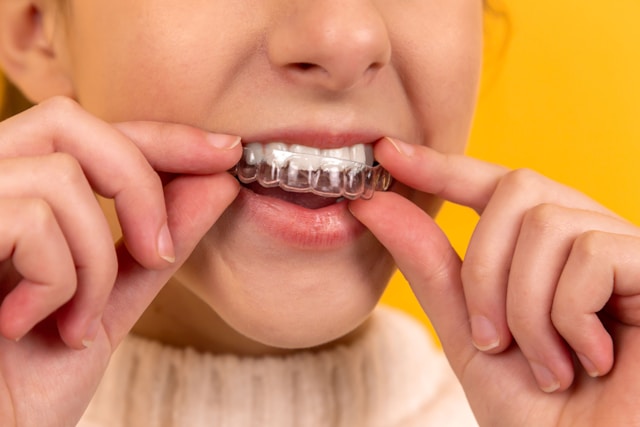
The transformation has accelerated as remote work normalized video calls and social media amplified appearance consciousness. Traditional metal braces, once the only viable option for most orthodontic cases, now compete with nearly invisible alternatives that allow patients to eat normally, maintain oral hygiene easily, and avoid the social stigma often associated with conventional orthodontics.
For the millions of Americans considering orthodontic treatment — particularly adults who delayed care during childhood or teens seeking less conspicuous options — understanding clear aligner advantages versus limitations has become critical for making informed decisions. The choice affects not just treatment duration and comfort, but daily routines, professional interactions, and long-term oral health outcomes.
How Do Clear Aligners Work Compared to Traditional Braces
Clear aligners apply controlled, gentle pressure to teeth through a series of custom-made, removable trays, each designed to move teeth incrementally toward their final positions. Unlike traditional braces that use metal brackets and wires to create continuous force, aligners work through planned, sequential movements programmed into each tray’s design. Patients typically wear each set of aligners for 20-22 hours daily over one to two weeks before advancing to the next set.
The fundamental difference lies in force application and control. Traditional braces create constant pressure through wire tension that orthodontists adjust during monthly appointments. This system can generate more aggressive movement, making it effective for complex cases involving severe crowding, significant bite issues, or teeth that need rotation or vertical repositioning. The brackets and wires provide anchor points that allow orthodontists to move individual teeth in directions that might be challenging for aligners alone.
Clear aligners, by contrast, rely on the precise fit of each tray to create targeted pressure points. Advanced software maps the entire treatment sequence before fabrication begins, using 3D imaging to predict how teeth will respond to each incremental adjustment. This digital planning allows for highly controlled movements but works best when those movements fall within predictable parameters — primarily tipping and limited rotation of front teeth, along with expansion and spacing corrections.
The removable nature creates both the primary advantage and the main limitation of aligner therapy. Patients can eat without restrictions, brush and floss normally, and remove aligners for important social or professional situations. However, this flexibility demands exceptional patient compliance; insufficient wear time — anything less than 20 hours daily — can derail treatment progress and extend timelines significantly. Traditional braces eliminate the compliance variable entirely, making them more predictable for patients who might struggle with consistent aligner use.
What Are the Key Advantages of Clear Aligners for Mild to Moderate Cases
Aesthetic discretion represents the most obvious benefit, particularly valuable for professionals whose careers involve public speaking, client interaction, or media appearances. The clear plastic material becomes virtually invisible at normal conversational distances, allowing adults to pursue orthodontic care without the social or professional concerns that often accompany traditional braces.
Oral hygiene maintenance improves dramatically compared to fixed appliances. Patients remove aligners completely for brushing and flossing, accessing all tooth surfaces without navigating around brackets and wires. This accessibility reduces the risk of white spot lesions — permanent enamel damage that can occur when plaque accumulates around bracket bases. Research from the Journal of Clinical Orthodontics shows significantly lower rates of gingivitis and periodontal inflammation in aligner patients compared to those wearing traditional braces.
Dietary freedom eliminates the extensive food restrictions required with braces. Patients can eat sticky, hard, or chewy foods without fear of damaging appliances, removing aligners for all meals and snacks. This flexibility proves especially valuable for teens navigating social eating situations or adults with unpredictable work schedules that make bracket-friendly meal planning difficult.
Comfort advantages stem from the smooth plastic construction that eliminates the bracket and wire irritation common with traditional braces. While patients experience pressure and mild discomfort during the first few days with each new aligner set, they avoid the cuts, sores, and emergency visits for broken wires that frequently interrupt traditional treatment. The ability to remove aligners temporarily for special occasions — important presentations, wedding photos, or sports activities — provides psychological comfort even when patients choose to keep them in.
For patients considering Invisalign treatment in Newport Beach, these advantages often outweigh the additional compliance requirements, particularly when treatment goals align well with aligner capabilities.
What Practical Considerations Ensure Clear Aligner Success
Clear aligner therapy demands active patient participation that extends far beyond simply wearing the trays. Success depends on understanding both the behavioral requirements and common challenges that can derail treatment progress.
How Does Patient Compliance Affect Treatment Outcomes
The 20-22 hour daily wear requirement isn’t arbitrary; it reflects the biological realities of tooth movement and bone remodeling. Teeth begin returning to their original positions within hours of removing aligners, a phenomenon called relapse. Consistent wear maintains the gentle pressure needed for controlled movement while preventing backward drift that can stall progress.
Patients who wear aligners only 16-18 hours daily often experience extended treatment times, requiring additional aligner sets to compensate for lost progress. Some cases become impossible to complete when compliance falters significantly, forcing conversion to traditional braces. Tracking apps and reminder systems help, but ultimately success depends on integrating aligner wear into daily routines as naturally as wearing contact lenses.
The psychological aspect proves equally crucial. Patients who view aligners as temporary inconveniences rather than treatment tools often struggle with consistent wear. Those who understand the scientific basis for the wear schedule and track their progress through regular photos tend to maintain better compliance throughout treatment.
Eating schedules require restructuring for many patients. The need to remove aligners for all food and drink except water means consolidating meals and snacks into defined periods, then cleaning teeth before reinserting aligners. Frequent snacking or sipping sugary drinks throughout the day becomes impractical, often leading to improved dietary habits as an unexpected benefit.
How Can Common Challenges Be Overcome During Treatment
Speech adaptation affects most patients during the first week with new aligners, particularly those that include attachments or bite ramps. The slight thickness changes how the tongue contacts teeth during speech, causing temporary lisping or altered pronunciation. Reading aloud for 15-20 minutes daily accelerates adaptation, helping the tongue adjust to the new oral environment more quickly.
Aligner loss or damage creates treatment delays and additional costs when replacements are needed. Patients traveling frequently should carry the previous aligner set as backup, since wearing an older tray temporarily causes less setback than leaving teeth uncovered. Keeping aligners in their case during meals prevents loss and protects them from damage; many treatment delays stem from aligners accidentally discarded in restaurant napkins or damaged by pets who find them appealing chew toys.
Cleaning and maintenance requires developing consistent routines to prevent odor, discoloration, and bacterial buildup. Rinsing aligners with cool water after removal and brushing them gently with a soft toothbrush and clear soap maintains hygiene without damaging the plastic. Hot water warps the trays, while colored soaps or toothpastes can cause staining that makes aligners more visible.
Social situations become manageable with planning and practice. Patients learn to remove aligners discreetly and should always carry their case, avoiding the awkward moments of trying to store aligners in napkins or pockets. Many patients find that briefly explaining their treatment to friends and family eliminates self-consciousness about removal during meals.
What Are the Limitations and Risks of Clear Aligner Treatment
Clear aligners excel within specific parameters but face significant limitations when orthodontic problems exceed their mechanical capabilities. Complex bite corrections, particularly those involving severe overbites, underbites, or crossbites, often require the precise force vectors that only traditional braces with elastics can provide. The sequential nature of aligner movement makes simultaneous multi-directional tooth adjustments challenging.
Severe crowding beyond 6-7 millimeters typically requires tooth extraction or significant enamel reduction that aligners alone cannot accomplish effectively. While mild to moderate spacing issues respond well to aligner therapy, cases involving impacted teeth or severely rotated molars often need the anchor points and leverage that brackets and wires provide.
Root movement presents another significant limitation. Aligners excel at tipping teeth — tilting the visible crown portion — but struggle with moving entire tooth roots through bone. Traditional braces can apply torquing forces that control root position more precisely, crucial for achieving optimal bite relationships and long-term stability.
Patient selection criteria extend beyond case complexity to behavioral factors. Individuals with poor oral hygiene habits may struggle with the discipline required for proper aligner care and cleaning. Those with busy lifestyles involving frequent travel, irregular eating patterns, or high-stress environments that encourage nervous habits like teeth grinding may find compliance challenging.
Treatment duration often extends beyond initial estimates when aligners don’t track precisely with treatment plans. Refinement phases requiring additional aligner sets occur in approximately 70% of cases, while traditional braces typically achieve predicted results within original timeframes. Patients should understand that quoted treatment times represent best-case scenarios assuming perfect compliance and ideal biological response.
Cost considerations include not just initial treatment fees but potential additional expenses for replacement aligners, refinement phases, and retainer systems. Insurance coverage varies significantly, with some plans treating aligners as cosmetic rather than medically necessary treatment, regardless of the underlying orthodontic condition.
What Do Research Studies Reveal About Clear Aligner Outcomes
Clinical research from the Journal of Clinical Orthodontics demonstrates that clear aligners achieve comparable results to traditional braces for mild to moderate crowding and spacing cases, with success rates exceeding 85% when patient compliance meets recommended guidelines. However, the definition of “success” varies significantly between treatment types and case complexity.
Studies tracking long-term stability show retention protocols become crucial for maintaining aligner treatment results. The American Journal of Orthodontics and Dentofacial Orthopedics reports slightly higher relapse rates in aligner-treated cases compared to traditional braces, particularly for rotation corrections and bite adjustments. This difference appears related to the biological response to different force applications rather than treatment quality.
Predictability research reveals that certain movements respond more reliably to aligner therapy than others. Intrusion (moving teeth into the gums), rotation of rounded roots, and significant bite corrections show lower success rates with aligners alone. Conversely, tipping movements, space closure, and mild expansion demonstrate excellent predictability and stability over time.
Patient satisfaction surveys consistently favor clear aligners for comfort, convenience, and aesthetic acceptance, but traditional braces score higher for treatment predictability and practitioner control. The choice increasingly depends on matching patient priorities with treatment capabilities — those prioritizing discretion and flexibility accepting potential trade-offs in treatment complexity and duration.
Future developments in aligner technology focus on improving force delivery systems and incorporating new materials that provide more precise tooth movement. However, the fundamental mechanical limitations remain unchanged, making case selection and patient education crucial for optimal outcomes.
The evidence suggests that success with clear aligner therapy depends less on the technology itself and more on appropriate case selection, realistic patient expectations, and exceptional compliance with treatment protocols. Understanding these factors before treatment begins helps ensure that patients choose the orthodontic approach best suited to their specific needs and lifestyle demands.










Add Your Comment