


Children do not learn kindness because we tell them to be kind. They learn it by watching how we treat people when no one is grading us.
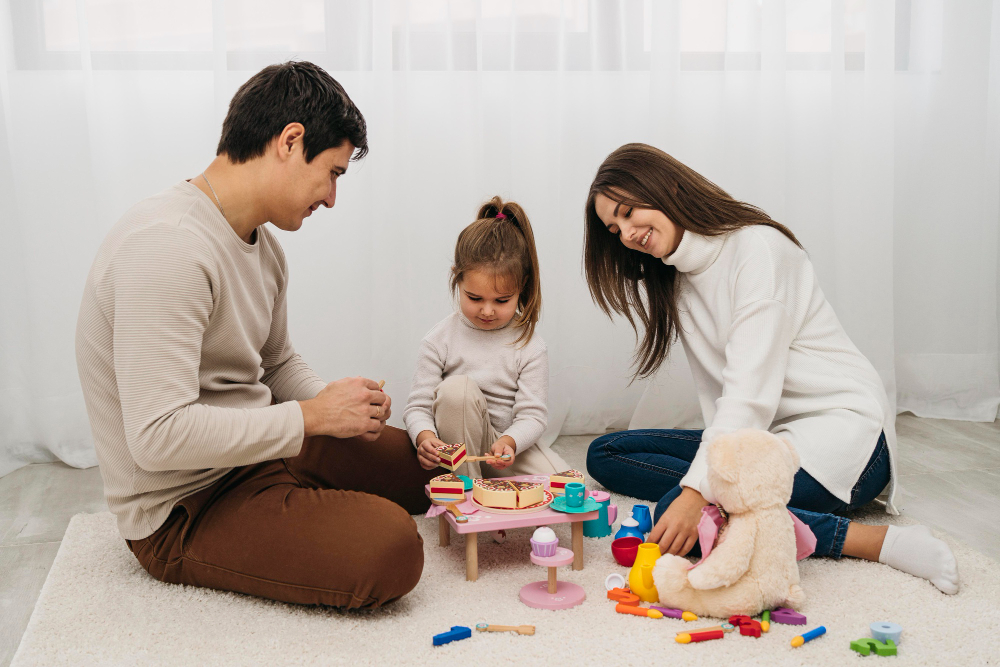
Photo credit
They notice when we show up for others, when we lose our patience, and when we let someone help us. They learn what love looks like when we are tired. And right now, most kids are learning from parents who are trying to do everything themselves.
That is the problem.
We talk about empathy like it is something you can teach in a classroom. But empathy starts at home, in the quiet, messy parts of life where care happens without applause.
And too many families are modeling burnout instead of balance.
The Myth of the Capable Parent
There is an unspoken rule in parenting culture that you must always look capable. You should keep your house together, stay on top of work, cook meals that look intentional, and handle every crisis calmly.
Admitting that you need help feels like failure.
But what our children actually need to see is the opposite. They need to see us asking for help.
They need to see us accept it without shame.
Because when they see a parent handle exhaustion with honesty instead of denial, they learn that care is not about perfection. It is about humility and connection.
Pretending that everything is fine teaches them that love means silence, that care means exhaustion, and that asking for help is weakness. That is not the message any of us want to pass down.
What Kids Really Notice
Kids see more than we think. They see the moments when you get frustrated but try again. They see when you comfort your parents, when you take a phone call to check in on someone who is unwell, or when you stop to listen instead of rushing away.
They also notice when you are running on empty. When you are short-tempered, when dinner turns into takeout three nights in a row, when your voice sounds tired even though you say you are fine.
They do not judge you for that. They just store it as a model of what care looks like.
If they grow up watching you do everything alone, they will think that is what love requires. If they grow up watching you accept support, they will learn that real strength is shared.
Help Is Not a Luxury
Home care is not just for people who are sick or elderly. It is a form of support that keeps families stable. It covers the parts of life that fall between the cracks. The recovery days, the post-surgery stretches, the moments when someone you love cannot do everything themselves.
Companies like Integracare Home Care exist to make that balance possible. They send trained caregivers who help with daily routines, medical needs, and personal care so families can stop operating in crisis mode.
Getting help at home does not mean you have failed. It means you have built a system that protects your family’s energy and wellbeing. That is what your children should see: a household that values care, not one that glorifies exhaustion.
Why We Resist Help Even When We Need It
Most parents resist help because we think we should be able to handle it. We see the endless highlight reels online: the spotless homes, the perfect meals, the patient smiles and we start believing that struggle means we are behind.
It does not. It means we are human.
There is nothing noble about running yourself into the ground to prove your devotion.
If you burn out, no one wins. Your children learn anxiety instead of stability, and you lose the parts of parenting that are actually joyful.
The moment we accept that help is a normal part of family life, everything shifts.
It is not indulgent.
It is sustainable.
Care Is Contagious
When your child sees you helping a grandparent manage their medication, or scheduling a home care visit so your parents can stay safe and independent, they are witnessing compassion in motion. They are learning that care is not about control; it is about consistency.
They also see what mutual respect looks like. Because home care is not just about receiving help. It is about allowing others to contribute their skills and patience to something that matters.
Children pick up on that dynamic immediately.
They learn that asking for help does not lower your value.
It strengthens everyone involved.
When they grow up, that lesson stays. They will know how to show up for friends, partners, and families in ways that feel healthy. They will know that love is not self-erasure. It is teamwork.
Letting Go of the “Superparent” Idea
The “superparent” myth is exhausting. It tells you that if you just work harder, plan better, or care more, you can handle everything on your own. That is not how real life works.
Real life involves variables. Jobs. Aging parents. Illness. Burnout. Children with their own complex needs. You cannot control all of it.
The healthiest families are not the ones who do it all. They are the ones who know when to delegate. They are the ones who accept that structure, support, and planning are a form of love.
You are not supposed to do everything alone. You are supposed to build a life that makes room for everyone’s limits, including your own.
What Modeling Care Actually Looks Like
Modeling care is not about grand gestures. It happens in small, repetitive acts that your children quietly absorb.
It looks like:
- Saying yes when someone offers help instead of pretending you are fine.
- Treating caregivers, nurses, and service providers with respect and gratitude.
- Checking in on neighbors or family without expecting anything in return.
- Taking time to rest without apology.
Kids watch all of that. They see you draw boundaries. They see you treat care as something to share, not something to hoard.
That becomes their blueprint for adulthood.
The Next Generation of Care
The world your children will grow up in will demand collaboration. Workplaces are changing, families are spread out, and the idea of “doing it all” is already collapsing under its own weight.
If they grow up understanding that accepting help is a normal, responsible part of life, they will carry that into everything they do. They will know how to ask questions, share the load, and protect their own mental health.
That is the real inheritance we can give them. Not money or status, but a model of care that is sustainable.
You Cannot Teach What You Do Not Live
You cannot tell your children that it is okay to ask for help while you are quietly falling apart.
They will not believe your words.
They will believe your example.
Letting them see you lean on support, whether that means a friend, a family member, or professional home care, shows them that needing others is not failure. It is part of being human.
That lesson stays longer than any lecture ever could.
The Shift That Happens When You Accept Help
Something changes when you finally stop doing everything yourself.
You become calmer.
You listen more.
You stop rushing from task to task.
Your home starts to feel like a place to live again instead of a checklist to maintain.
Children feel that difference immediately. They do not need you to be superhuman. They need you to be present.
When they see you live with balance, they learn that care is not chaos.
It is clarity.
The Real Definition of Care
Care is not a single act. It is a pattern. It is the way we show up for others and allow them to show up for us.
It happens when you check on your parents. It happens when you make room for someone else’s pace. It happens when you let professionals help your family stay healthy instead of pretending you can do it all.
That is what children remember. Not the Pinterest meals or the Instagram-worthy moments.
The ordinary, consistent, unpolished acts of care.
The Final Thought
You do not teach care by talking about it. You teach it by living it, in front of your children, even when it feels uncomfortable.
Let them see that help is not something to hide. Let them see that compassion starts with accepting limits.
One day, they will be the ones caring for others, maybe for you. And when that time comes, they will know what to do. Because they learned it from watching you.









Add Your Comment