


Atrophic scars — the sunken marks left behind by acne or injury — don’t just fade with time or treatment. Often, it’s the small, everyday habits that quietly work against healing.
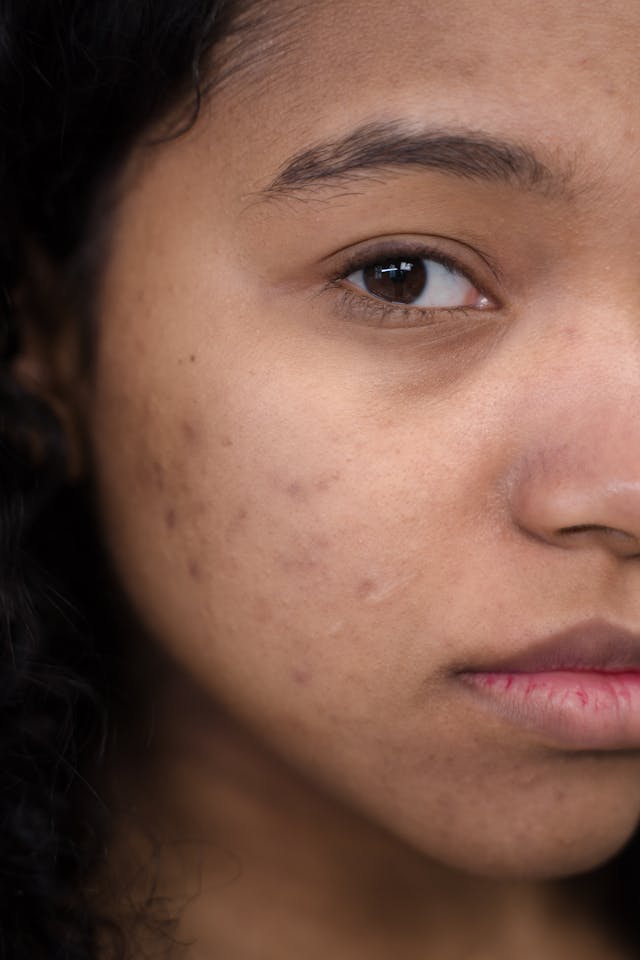
From unprotected sun exposure to poor skincare choices, the actions we repeat without thinking can slow recovery and even worsen scar visibility. And while advanced treatments help, they can only go so far if your daily routine is sabotaging progress.
This article breaks down five common habits that can make atrophic scars worse — and what you can do instead.
Sun Exposure and Scar Pigmentation
Most people underestimate how much the sun impacts skin recovery — especially when it comes to scarring. Direct sunlight can darken atrophic scars, making them appear more noticeable. This happens because UV radiation stimulates melanin production, leading to hyperpigmentation in already compromised skin.
In the case of atrophic scars, where the skin’s structure is sunken or thinned, this discoloration creates more contrast between the scar and surrounding skin — exaggerating its depth and visibility.
What to Do Instead:
- Apply broad-spectrum SPF 30+ daily, year-round
- Reapply every 2–3 hours when outdoors or exposed to sunlight
- Wear a hat or stay shaded during peak UV hours (10am–4pm)
Sunscreen won’t reverse scarring, but it prevents fresh damage and helps ensure treatments deliver visible, lasting results.
Picking and Touching the Skin
It might feel harmless — or even satisfying — but picking at your skin is one of the worst habits for atrophic scars. Every time you squeeze, scratch, or rub a healing area, you risk:
- Delaying the healing process
- Worsening inflammation
- Creating new trauma that deepens the scar
Atrophic scars form when the skin fails to regenerate enough collagen during healing. Repeated picking further damages tissue that’s already struggling to repair itself — leading to wider, deeper depressions over time.
Even unconscious behaviors like resting your face in your hands or scratching without thinking can introduce bacteria and irritate healing skin.
Simple Rule of Thumb: If you didn’t apply it with clean hands or a cotton pad — don’t touch it.
What You Can Do Instead:
- Use hydrocolloid patches on acne to reduce the urge to pick
- Keep nails short and clean to minimize damage if you do touch
- Identify emotional triggers — stress and boredom often drive skin picking
- Speak to a dermatologist or behavioral therapist if it becomes compulsive
Poor Skincare Routines
Consistency beats complexity when it comes to scar care — yet many people either overdo it with harsh products or underdo it by skipping the basics. Both extremes can worsen atrophic scars by irritating the skin or stalling the healing process altogether.
Common Skincare Habits That Backfire:
| Habit | Why It Hurts Scar Healing |
| Over-exfoliating | Thins skin and increases inflammation |
| Using harsh cleansers or toners | Disrupts the skin barrier, leading to irritation |
| Skipping moisturizer | Dehydrates skin, slowing regeneration |
| Layering too many actives | Causes sensitivity, which delays repair |
Healing from atrophic scars requires a stable, gentle environment — not daily chemical warfare. Your skin needs support, not stress.
What to Focus On Instead:
- Gentle cleansing twice a day to reduce buildup
- Moisturizing daily to keep the skin barrier intact
- Using non-comedogenic SPF to protect and prevent pigment changes
- Introducing retinoids or acids slowly, under professional guidance
Smoking and Skin Repair
Few habits interfere with skin healing as much as smoking — yet its impact on scarring is often underestimated.
Nicotine and the thousands of chemicals in cigarettes constrict blood vessels, reducing the oxygen and nutrients delivered to the skin.
This slows down the wound healing process and impairs the body’s ability to produce collagen — which is already in short supply in atrophic scars.
What Smoking Does to Healing Skin:
- Slows collagen synthesis — critical for filling in depressions
- Reduces immune response — increasing risk of infection
- Delays wound closure — prolonging inflammation
- Accelerates skin aging — making scars look worse over time
If You Can’t Quit Immediately:
- Avoid smoking for at least 2–4 weeks after any in-clinic scar treatment
- Supplement with vitamin C and zinc, which support tissue repair
- Consider nicotine replacement therapy or consult a professional for support
Stress and Recovery
Stress doesn’t just affect your mood — it shows up in your skin.
Chronic stress raises levels of cortisol, a hormone that weakens your immune system, increases inflammation, and slows the body’s natural repair mechanisms.
This hormonal shift creates a double-bind for anyone trying to heal atrophic scars.
How Stress Impacts Skin Healing:
- Increases inflammatory responses, leading to redness and flare-ups
- Disrupts sleep quality, when most cellular repair happens
- Can trigger breakouts, creating more opportunities for scarring
- Delays collagen regeneration, essential for scar improvement
Small, Effective Stress Reducers:
- Prioritize 7–9 hours of quality sleep
- Use guided breathwork or meditation apps for daily resets
- Engage in low-impact movement like walking or yoga
- Talk to a friend, therapist, or coach to help process emotional tension
Conclusion
Atrophic scars are stubborn — but they’re not unchangeable. While advanced treatments can make a real difference, it’s often the small, repeated behaviors that determine whether those treatments actually work long term.
Sun exposure, picking, poor skincare, smoking, and unmanaged stress may seem unrelated at first glance. But together, they quietly create an environment where healing stalls and scars become more pronounced.
The good news? Each of these habits is within your control.
Start by doing one thing differently — wear sunscreen daily, stop picking that spot, or get to bed on time. Over time, those simple shifts compound. And in skin recovery, it’s rarely one big thing that makes the difference — it’s the sum of the small, consistent ones.









Add Your Comment