


Self-care has expanded well beyond the face masks and meditation sessions it was once associated with. For a growing number of people, it includes medical and aesthetic treatments that support how they feel in their own skin and Botox has quietly become one of the more mainstream additions to that toolkit.
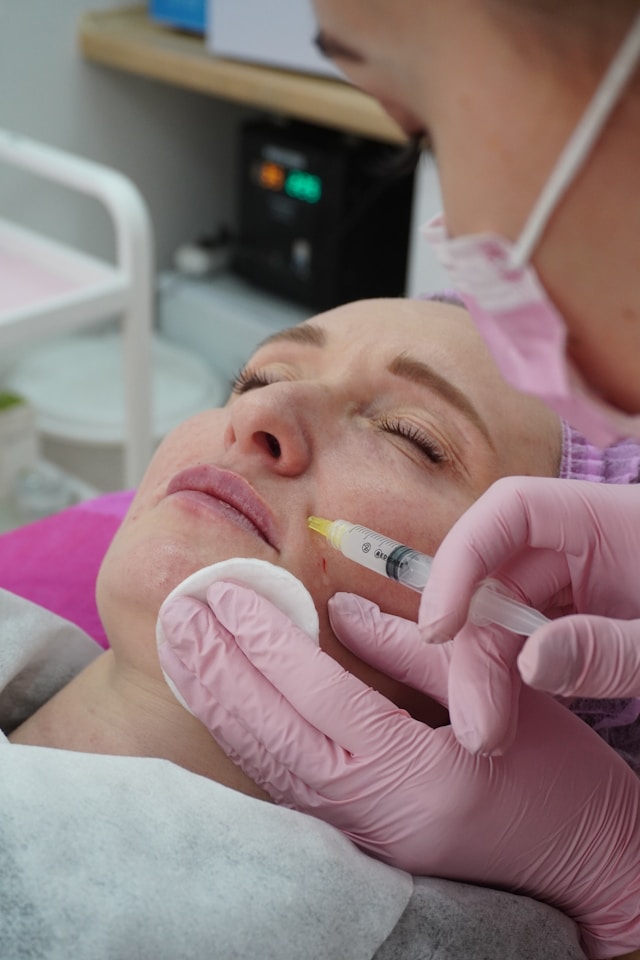
That shift deserves a clear-eyed look. What does Botox actually do? How does it fit alongside other self-care practices? And what makes it different from the alternatives? This article walks through the practical and physiological answers to those questions without the hype in either direction.
How Widely Botox Is Being Used and What That Tells Us
Botox and its equivalents have become the most performed aesthetic treatment in the country by a significant margin. According to the American Society of Plastic Surgeons 2024 report, neuromodulator injections which include Botox, Dysport, and Xeomin were administered 9.8 million times in the United States in 2024, representing a 4% increase year over year. What is notable is that demand remained consistent even in an economically uncertain year, suggesting that patients who have incorporated it into their routine treat it as a genuine wellness priority rather than an occasional indulgence.
The demographic range has also broadened considerably. While treatments were historically associated with patients in their fifties and beyond, the patient base now spans a much wider age range as awareness of preventive use has grown alongside the treatment’s proven safety record.
What Botox Does and How It Fits Into a Broader Self-Care Picture
Understanding the mechanism behind Botox removes a lot of the mystique. Botulinum toxin works by temporarily blocking the nerve signals that cause specific facial muscles to contract. When those muscles relax, the overlying skin which has been repeatedly creased by the movement smooths out. The effect is temporary, typically lasting three to five months, after which the muscle activity gradually returns and the treatment can be repeated.
What this means in practice is that Botox functions as a maintenance treatment rather than a permanent change. It requires periodic repetition to sustain results, which is why patients who find it valuable tend to integrate it into their routine the way they might approach regular facials or dental cleanings as a scheduled practice rather than a one-off fix.
For patients in the Boston area considering where to go for treatment, finding BOTOX in Boston through a board-certified plastic surgery practice rather than a standalone med spa means the treatment is delivered in a medical environment with the oversight and training to handle both the procedure and any questions about how it fits into your broader aesthetic goals.
The Self-Care Case: What Patients Actually Report
The appeal of Botox within a self-care context is not primarily cosmetic in the narrow sense. Patients who maintain regular treatments consistently report that the benefit is less about looking younger and more about looking like themselves specifically, looking as rested and alert as they actually feel, rather than carrying the tired or tense expression that can become fixed without any corresponding emotional state behind it.
There is also a well-documented therapeutic dimension. Botox injections in the glabellar region, the area between the brows responsible for frowning, have been associated with reductions in anxiety and depressive symptoms in multiple clinical studies, with researchers theorising that reducing the physical expression of negative emotion may partially interrupt the feedback loop that sustains it. This is an active area of research rather than a settled conclusion, but it adds a meaningful layer to the self-care framing beyond straightforward aesthetics.
For many patients, the primary self-care value is simpler: they feel more confident in professional and social situations when they are not distracted by how they look. Confidence rooted in feeling good about your appearance is a legitimate wellbeing consideration, and one that medical aesthetic treatments can contribute to when chosen thoughtfully and performed well.
How to Approach the Decision Thoughtfully
Incorporating Botox into a self-care routine is a personal decision, and like any self-care practice, the value depends heavily on whether it actually serves your specific goals and circumstances. There are a few practical considerations worth working through before a first appointment.
The first is provider selection. Botox results vary considerably depending on the injector’s understanding of facial anatomy, dosing philosophy, and approach to individualisation. A practice led by a board-certified plastic surgeon like Montilla Plastic Surgery in Boston brings a level of anatomical expertise that directly affects how natural and balanced the results look, particularly in patients who are new to treatment and whose baseline muscle patterns need careful assessment.
The second is starting conservatively. First-time patients sometimes arrive with expectations shaped by over-treated examples in popular media. The standard of care at reputable practices is to start with a minimal effective dose, observe how the patient’s specific musculature responds, and adjust at a follow-up appointment if more correction is desired. Results that preserve natural movement are consistently more satisfying at every follow-up than aggressive initial treatment.
The third is treating it as part of a holistic approach rather than a substitute for other practices. Botox addresses one specific category of concern: dynamic lines caused by muscle movement. Skin quality, hydration, sun protection, sleep, and nutrition all contribute to how skin ages and responds over time. Patients who combine consistent aesthetic treatments with strong foundational habits consistently report the best long-term outcomes.
What to Expect at a First Appointment
For anyone who has not had a Botox appointment before, knowing what to expect removes a lot of the uncertainty. The appointment itself is brief, typically 15 to 30 minutes including the consultation portion. The injections themselves take only a few minutes and involve a series of small, precisely placed injections using a fine needle.
Most patients describe the sensation as minor pressure or a small pinch at each injection point. There is no anaesthesia required, though providers sometimes apply a topical numbing cream for patient comfort. Redness and occasionally small bumps at the injection sites are normal and typically resolve within an hour.
Results begin to appear within two to four days and are fully visible by two weeks. This is also the standard timeframe for a follow-up appointment if adjustments are needed. Activities can be resumed immediately, with the standard advice being to avoid lying flat or strenuous exercise for the first four hours.
Final Thought
Botox sits comfortably within a modern self-care framework when it is approached the way the best self-care practices are: with realistic expectations, chosen for the right reasons, delivered by someone who is genuinely qualified, and integrated alongside other habits that support how you look and feel.
It is not a substitute for sleep, nutrition, or sun protection. It does not stop the ageing process. But for patients who have found it valuable, it is a consistent and manageable addition to the roster of things they do to feel well in their own skin and that is a perfectly legitimate reason to include it.










Add Your Comment