


Outdoor and natural-setting weddings attract couples for reasons that are genuinely compelling. The light at a lakeside ceremony in late afternoon is something no ballroom reproduces. The spatial openness of a ceremony that uses the landscape rather than architecture as its frame creates a different emotional register than any interior venue. Those qualities are real, and they come with a planning complexity that most couples underestimate when they fall in love with a location during a site visit on a perfect day in April or October. The venue looked ideal because the conditions were ideal, and the work of planning around a natural setting is largely the work of building contingency for when the conditions aren’t.
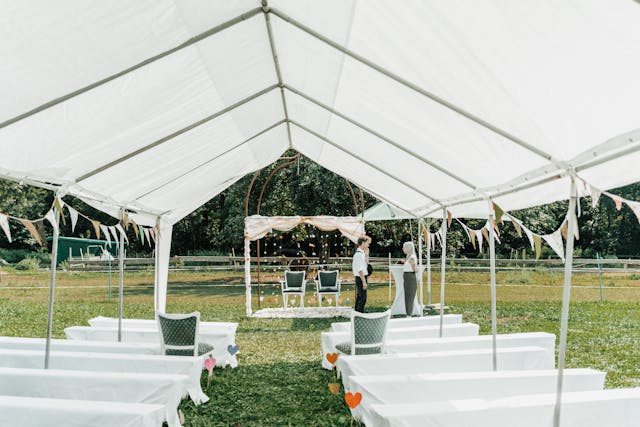
Weather Planning That Goes Beyond Having a Backup
Most venues offer a weather backup in the contract, and most couples treat that backup as a resolved issue once it’s confirmed. It isn’t. A backup plan that exists on paper but hasn’t been walked through operationally is a description of a space rather than a plan for using it, and the distinction between those two things becomes concrete when the morning of the wedding produces conditions that require activating it. Who makes the call, and how late can that decision be made while still allowing the setup to shift? How does guest communication work when the ceremony location changes four hours before the event? What elements of the planned décor transfer cleanly to the indoor space and which ones don’t, and what does the indoor setup look like without them?
Working through those questions before the week of the wedding produces a backup plan that functions as an actual operational document rather than a contractual formality. Venues that have executed weather contingencies before can walk through their specific process, and that conversation is more informative than any assurance that a backup space exists.
What Natural Light Actually Requires From a Schedule
Lakeside wedding venues are chosen partly for the quality of light they provide, and that light has a schedule that doesn’t negotiate with the timeline a couple wants for other reasons. The golden hour that makes lakeside ceremony photos what they are exists for a specific window that shifts across the calendar, and a ceremony scheduled to end at a time that places the couple and their photographer in the wrong position relative to the light source produces images that don’t reflect what the couple saw in the inspiration photos that led them to the venue.
This isn’t a reason to let photography dictate the entire event timeline. It’s a reason to know where the light will be at each hour of the planned event and to make the scheduling decisions that actually matter, ceremony start time and end time, with that information rather than after it. A twenty-minute adjustment to ceremony timing can be the difference between light that’s doing the work and light that requires significant post-processing to approximate what was there twenty minutes earlier.
Managing Guest Comfort in Natural Settings
Outdoor comfort is a variable that affects guest experience in ways that override almost everything else about the event. Guests who are uncomfortable, too hot, too cold, too exposed to wind or direct sun, are not fully present for the ceremony or the reception, and that discomfort colors their memory of the event regardless of how beautiful the setting was or how well everything else was executed.
The variables are mostly predictable if the planning accounts for them honestly. A lakeside ceremony in July in most of the country involves heat and humidity that shaded seating and adequate airflow can partially address but not eliminate. A late afternoon ceremony at elevation in September can be significantly colder than the couple experienced on their April site visit, and guests who were told the event was outdoors without any guidance on temperature often underdress in ways that shorten their tolerance for the outdoor portion of the evening.
Simplicity as a Planning Principle
The couples who navigate natural setting weddings most successfully tend to share an orientation toward simplicity that runs against the instinct to maximize every element of the setting. The location is doing significant visual and emotional work on its own, and layering complex décor, elaborate production elements, or a program that fights for attention against the natural environment produces an event that feels busy rather than one that lets the setting do what it was chosen for. The planning question that keeps complexity from accumulating unchecked is whether each addition serves the experience or competes with it, and in natural settings that question resolves clearly more often than it does in venues where the environment isn’t already providing something irreplaceable.











Add Your Comment