


Most people who start modifying their cars for power think about exhaust first, or maybe a tune. The intake side gets treated like an afterthought, something you swap out because it looks good in an engine bay photo or because the stock setup sounds uninspiring. That thinking leaves real performance on the table, and once you start paying attention to how air actually moves through an engine, the intake side becomes one of the more interesting problems to work through.
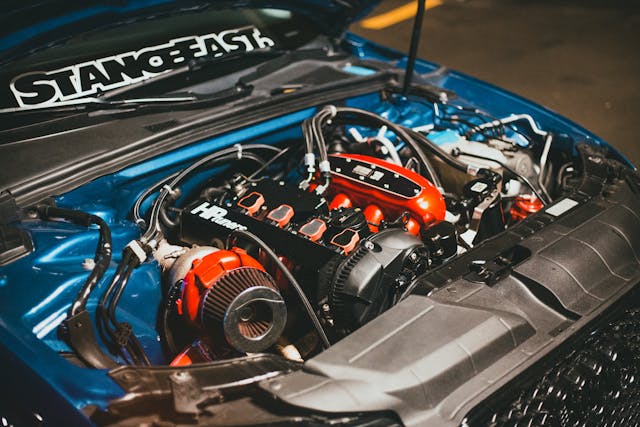
Why the Stock Path Creates Friction You Don’t See on a Dyno
Factory air paths are designed around compromises that have nothing to do with airflow efficiency. Noise regulations, packaging constraints, emissions calibration, warranty liability. The result is usually a system with multiple sharp bends, resonator boxes that choke flow at higher RPM, and heat-soaked plastic sitting inches from the exhaust manifold. None of that shows up as a single catastrophic loss, which is why people dismiss it. The degradation is distributed, which makes it easier to ignore.
What actually happens at part throttle is often more telling than peak dyno numbers. Throttle response sharpens when the air column from the filter to the throttle body is shorter and smoother, and that comes through in daily driving before you ever see it on a graph. Inlet air temperature also matters more than people admit. A 20-degree drop in IAT can meaningfully affect knock threshold, and on a turbocharged application running aggressive timing, that’s not trivial.
The Engineering Behind Better Flow
Tube diameter, bend radius, material rigidity, filter positioning, all of it interacts. A wider tube sounds better on paper but can actually hurt throttle response at lower RPM by reducing air velocity before the throttle blade. The geometry has to match the engine’s displacement and RPM range, which is why kits that work brilliantly on one platform don’t translate cleanly to another even when the physical dimensions look similar.
Filter placement relative to heat sources is its own conversation. Pulling cool air from behind the bumper or over the wheel arch sounds like an obvious win, but you’re also pulling in air that’s carrying road debris, moisture in wet climates, and pressure fluctuations at highway speed that weren’t part of the original calibration. Sealed airboxes that isolate from engine bay heat while protecting the filter element are often the better real-world compromise, especially on daily-driven cars where you’re not chasing peak dyno horsepower on a controlled day.
The Eventuri air intake is a good example of a system that takes material science seriously rather than treating the intake as a simple pipe replacement. The carbon fiber construction reduces heat absorption compared to plastic or aluminum alternatives, and the venturi profile inside the inlet is shaped to accelerate air before it reaches the filter. Whether you feel that on a stock tune depends on the car, but on a mapped car where the ECU is calibrated to take advantage of improved inlet conditions, the difference shows up in more than just sound.
Where the Actual Gains Live
Pairing an optimized intake with a supporting tune is where the math starts to work in your favor. The tune can pull timing back on a hot, inefficient intake and add it back when the inlet conditions improve. That interplay is something bolt-on reviews rarely get into because most tests run a part against a stock map. The intake becomes part of a system rather than a standalone modification, and treating it that way changes how you evaluate the investment.
Turbocharged platforms get the most from this work because any restriction before the compressor inlet affects how the turbo spools. Even small improvements in pre-compressor flow show up as reduced spool time, which in a street driving context translates to better mid-range pull rather than a higher peak number at 7,000 RPM. That’s the kind of gain that actually changes how a car feels to drive, not just how it measures on a graph two hours into a dyno session.
Naturally aspirated engines still benefit, though the margin is narrower and more dependent on cam timing and compression ratio. High-revving NA builds, the kind chasing power per liter rather than total output, tend to see more from intake path work than low-compression daily drivers where airflow was never the limiting factor.











Add Your Comment