


According to the American Dental Association’s 2024 clinical guidelines, traditional full-mouth implant procedures can require up to 10 individual implants and multiple surgical sessions — yet the All-on-4 technique achieves comparable stability and function with just four strategically placed implants in a single day. As dental technology advances and patient expectations shift toward faster, more predictable outcomes, this streamlined approach has transformed how practitioners address complete tooth loss.
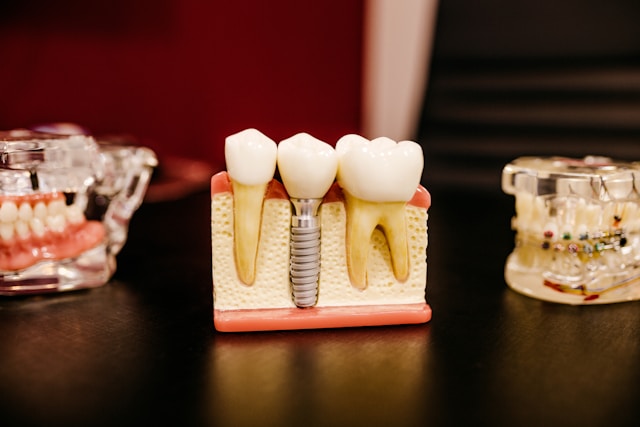
The stakes extend far beyond convenience. Complete edentulism affects nearly 40 million Americans, with traditional dentures often failing to restore proper chewing function or prevent the progressive bone loss that alters facial structure over time. For patients facing this reality, the difference between a solution that merely replaces missing teeth and one that preserves long-term oral health can reshape both immediate quality of life and decades of future wellbeing.
Understanding how All-on-4 implants work — and why they deliver benefits that extend well beyond aesthetics — reveals why this approach has become a cornerstone of modern restorative dentistry.
How Does the All-on-4 Dental Implant Procedure Work?
The All-on-4 technique revolutionizes traditional implant placement through strategic angulation and immediate loading protocols. Unlike conventional approaches that require one implant per missing tooth, this method uses four precisely positioned implants to support an entire arch of replacement teeth. The posterior implants are angled up to 45 degrees, which increases contact with available bone and often eliminates the need for bone grafting procedures that can delay treatment by months.
Here’s what makes the process remarkably streamlined: after careful 3D imaging and treatment planning, the dentist extracts any remaining damaged teeth, places all four implants, and attaches a temporary prosthetic bridge — all in a single appointment. This immediate loading approach means patients leave the office with functioning teeth rather than waiting months for healing before receiving their final restoration.
The procedure typically takes 2-4 hours per arch, depending on complexity. The angled placement of the back implants allows practitioners to anchor into denser bone areas, often avoiding the need for sinus lifts or extensive bone grafts that traditional straight implant placement might require. This strategic positioning maximizes the use of available bone while distributing chewing forces across the entire arch.
Most patients experience manageable discomfort similar to a complex tooth extraction, with swelling and tenderness resolving within a few days. The immediate restoration means no extended period without teeth, which addresses one of the most significant barriers patients face when considering full-mouth reconstruction. After initial healing, the temporary bridge is replaced with a final, custom-crafted prosthetic designed for long-term durability and optimal function.
What Functional and Aesthetic Benefits Do All-on-4 Implants Provide?
How All-on-4 Implants Enhance Appearance and Daily Function
The transformation extends far beyond simply having teeth again. All-on-4 implants restore the vertical dimension of the face — the distance between the nose and chin — which often collapses when natural teeth are lost. This restoration reverses the sunken appearance that makes individuals look prematurely aged, returning natural lip support and eliminating the deep creases around the mouth that develop with bone loss.
From a functional standpoint, the benefits become apparent with the first meal. Traditional dentures typically restore only 20-30% of natural chewing force, making many foods off-limits. All-on-4 implants, anchored directly into the jawbone, can handle nearly 90% of original bite force. Patients rediscover foods they haven’t enjoyed in years — from fresh apples to well-cooked steaks — without worrying about denture movement or pressure sores.
Speech clarity improves dramatically as well. Dentures often slip during conversation, creating clicking sounds or causing slurred speech. The fixed nature of All-on-4 restorations eliminates these concerns, allowing natural tongue positioning and confident speaking. Many patients report feeling more comfortable in social and professional situations once their speech returns to normal patterns.
The psychological impact proves equally significant. Individuals who have struggled with loose dentures or visible tooth loss often develop behaviors to hide their smile or avoid certain social situations. With Chicago all-on-4 dental implant treatment providing a permanent, stable solution, patients frequently describe a return to confidence they hadn’t realized they’d lost. The implants feel like natural teeth — no adhesives, no nightly removal, no anxiety about embarrassing slippage during important moments.
How Do All-on-4 Implants Preserve Jawbone and Facial Structure?
The bone preservation mechanism represents perhaps the most crucial long-term benefit of All-on-4 implants. When natural teeth are lost, the surrounding jawbone begins a process called remodeling — essentially shrinking away because it no longer receives the mechanical stimulation that tooth roots provided. This resorption continues throughout life with traditional dentures, which rest on top of the gums and provide no stimulus to underlying bone.
All-on-4 implants interrupt this destructive cycle through osseointegration — the biological process where titanium implants fuse directly with living bone tissue. The implants function as artificial tooth roots, transmitting chewing forces into the jawbone just as natural roots did. This mechanical loading signals the bone to maintain its density and structure, effectively halting the resorption process in the implant area.
The clinical evidence supporting this preservation is substantial. Studies tracking patients over 10-year periods show that areas around All-on-4 implants maintain bone height and width, while adjacent areas without implant support continue to remodel. This selective preservation creates a stark contrast in long-term facial appearance between implant and non-implant solutions.
Consider the cascade of changes that bone loss triggers: as the jaw shrinks, the distance between nose and chin decreases, lips lose support and turn inward, and facial muscles begin to sag without their bony foundation. The corners of the mouth may develop permanent creases, and the entire lower face takes on a collapsed appearance. Traditional dentures, despite multiple adjustments and relines over the years, cannot prevent this progression because they don’t address the underlying bone loss.
All-on-4 implants preserve not just the treated areas but also maintain the proper relationship between upper and lower jaws. This stability affects everything from chewing efficiency to sleep quality, as proper jaw positioning can reduce issues like teeth grinding and sleep apnea that sometimes develop when facial structure changes significantly.
Who is a Suitable Candidate and How Successful Are All-on-4 Implants?
What Factors Determine Patient Eligibility for All-on-4?
The ideal All-on-4 candidate has lost most or all teeth in one or both arches and possesses sufficient bone volume to support implant placement without extensive grafting. Unlike traditional implant protocols that require pristine bone conditions, the angled placement technique allows practitioners to work with moderate bone loss — often the reality for patients who have been without teeth for several years.
Age rarely serves as a disqualifying factor, with successful outcomes documented in patients from their 40s through their 90s. More critical factors include overall health status, bone density, and the presence of conditions that might impair healing. Uncontrolled diabetes, active cancer treatment, or heavy smoking can complicate the osseointegration process, though these aren’t necessarily absolute contraindications with proper management.
Bone quality assessment through 3D imaging reveals whether the available bone can support the angled implant placement that makes All-on-4 possible. Patients with severe bone loss in the posterior regions often prove to be ideal candidates, as the angled implants can reach into areas of better bone quality that straight implants couldn’t access. This adaptability explains why many patients told they weren’t candidates for traditional implants find success with the All-on-4 approach.
What Do Success Rates Reveal About All-on-4 Longevity?
Clinical research spanning over two decades demonstrates remarkable success rates for All-on-4 implants. The original studies published by Dr. Paulo Malo, who developed the technique, show 10-year survival rates exceeding 95% for the implants themselves and 94% for the prosthetic restorations. These numbers have been consistently replicated in multicenter studies across different patient populations and geographic regions.
What makes these statistics particularly meaningful is how they compare to alternative treatments. Traditional dentures require replacement every 5-7 years and often need multiple adjustments and relines throughout their lifespan. The 10-year data for All-on-4 restorations shows most patients require only routine maintenance and occasional minor adjustments — a dramatic difference in long-term treatment burden.
The biological success extends beyond simple survival statistics. Patient satisfaction surveys consistently show improvement in quality of life measures, including comfort during eating, confidence in social situations, and overall oral health perception. When complications do occur, they typically involve prosthetic adjustments rather than implant failure, and most can be managed without affecting the overall treatment success.
Perhaps most importantly, the success rates continue to improve as the technique matures. Refinements in implant surface technology, prosthetic materials, and surgical protocols have reduced early complications and enhanced long-term stability. This trajectory suggests that patients choosing All-on-4 today can expect even better outcomes than those reflected in the established literature.
The evidence points toward a treatment approach that not only addresses immediate functional needs but provides a foundation for decades of stable oral health — a consideration that becomes increasingly important as life expectancy continues to rise and patients seek solutions that will serve them well into their later years.











Add Your Comment