


Looking to snuggle up in a new bed for your bedroom, and can’t decide which one you should get with a nice quality, while not breaking the bank?
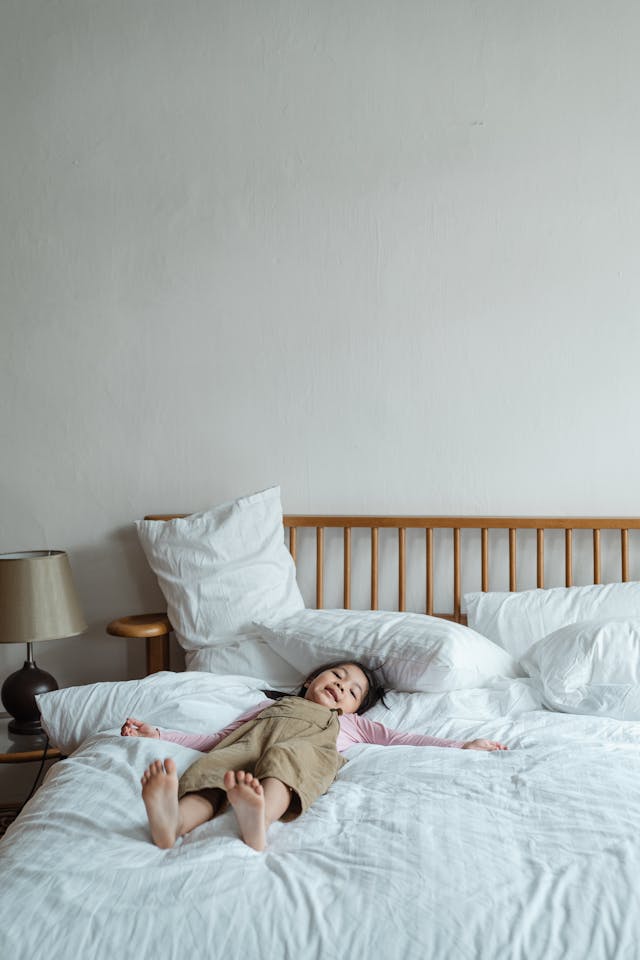
To get you started, here’s a guide about a full bed, one of the bed sizes you can consider when buying. This bed is one of the most popular choices in the market, and if you pair this with a Bluetooth sound machine, rest assured that you’ll sleep comfortably each night.
Read on to know what size a full bed is and what to know before buying.
The Standard Dimensions of a Full-Size Bed
Full-size beds, also known as double beds, are perfect for single sleepers who tend to toss and turn or sprawl. These beds have dimensions of 54 inches by 75 inches. Full-size beds are wider than single beds, making them a great starter mattress for couples or single sleepers. However, this bed size is not recommended for couples sharing their beds with children.
Although it has more than 16 inches space compared to a twin bed, a full-size bed would usually feel cramped for two individuals. Each person would have a sleeping space roughly the size of a crib-size mattress, making it difficult to turn and move.
The Full Bed vs. the Queen: What’s the Difference?
The full-sized and queen-size beds both have versatility and excellent comfort; they only differ in size and the type of sleeping comfort they provide. Here’s a comparison between a full bed and a queen bed:
- Full-Sized Bed
The surface area of a full-sized bed falls between a twin-size and a queen-size mattress. The full-sized bed may not be as popular as the queen due to its smaller dimensions, but it is preferred for its versatility.
As mentioned above, the standard dimension of a full-sized bed is 53 inches wide by 75 inches long. This size is ideal for individuals who sleep alone and couples who like to snuggle. A single sleeper should have plenty of space to stretch out, but for a couple, they may not have enough space and may start to feel cramped.
A full-sized bed is recommended for guest rooms or smaller bedrooms. However, if your bedroom only measures 10 feet by 12 feet, you may want to consider getting a twin-size or twin XL mattress.
Full-sized beds are cheaper compared to queen beds, so they are perfect for recent graduates or young adults just getting settled on their own.
- Queen-Sized Bed
Queen-sized beds measure 60 inches wide and 80 inches long. It is 5 inches wider and 7 inches longer than the full size, making it the most suitable for couples or bedrooms that measure 12 feet by 12 feet or larger. This bed is big enough for couples to sleep without disturbing one another.
Since the queen-size bed has more space compared to the full-sized bed, expect it to be more expensive. Queen-sized sleep accessories, such as bed sheets or mattress protectors, may be more expensive than full-sized accessories, as well.
When a Full Bed Is the Right Choice for You
A full-sized bed is 16 inches wider than a single bed and is perfect for:
- Single sleepers who want extra space
- Couples who don’t mind sharing
- Ideal for guest rooms
The Full Bed vs. the Twin: Which Is Better for Your Space?
If you’re debating whether to get a full-sized or twin-sized bed and wondering which is better for your space, here’s how they differ:
- Full-Sized Beds
Full-sized beds may not be as popular as the standard twin-size bed, but they can still be a great option. As previously mentioned, a standard full bed measures 54 inches wide and 75 inches long. This is generally a bit more versatile; some bunk beds still opt for a full-size on the bottom bunk. However, full-sized beds come at a slightly larger price tag.
- Twin-Sized Beds
Twin-sized beds are a popular option for their size and affordability. They are the smallest mattress size available on the market, and they measure 38 inches wide by 75 inches long. Most parents choose a twin-size bed as a starter mattress for their growing children, or for use in bunk beds when children share a sleep space.
Navigating Full XL Beds and Their Dimensions
Full XL beds measure 54 inches wide by 80 inches long. It has an extra 5 inches in length compared to a standard full-length. This additional space is ideal for individuals who are taller than average, especially those who sleep alone.
This bed size has a surface area that is 6 percent larger than a standard full, at 4,240 square inches. This is a great option for taller individuals who find the standard full-length a bit too short.
How to Choose Bedding for a Full-Size Bed
Full beds are a standard size, so you won’t have trouble finding sheets, comforters, or duvets that fit. Here are a few tips to make sure your bedding feels just as comfortable as your mattress:
- Check the dimensions: Standard full-size sheets measure about 54 inches by 75 inches, but deep-pocket fitted sheets are best if your mattress is extra thick.
- Go for breathable fabrics: Cotton and linen are great for year-round comfort, while flannel is perfect for colder months.
- Pick the right comforter size: A full/queen comforter often works well, giving you extra drape on the sides.
- Layer for versatility: Add throws, blankets, or a quilt for both style and comfort.
- Match your lifestyle: If you share your bed with pets or kids, look for durable, machine-washable fabrics.
Tips for Fitting a Full Bed in a Small Room
If you recently just moved into your apartment, or you just generally have a small room, and you want to fit a full bed, here’s how:
- Plot out the right size
You need a room at least 9 feet 6 inches by 10 feet 6 inches in size to fit a full-sized bed. Moreover, allotting about 24 inches around the perimeter of the bed is also advisable. This is to ensure that there is ample room for you to get in and out of your bed without causing any bumps.
- Make the bed the focus
Consider placing your bed to the side to leave more open floor space for a wardrobe or table. You can also add storage space by building a platform bed frame with cubbies underneath and using floating shelves to make the most of unused wall space. If you’re worried about the walking space, opt for a sliding cabinetry instead to maximize every inch you’ve got. The key is to make the bed the focus of your room and incorporate other essential things around it.
- Skip the headboard
You may need to skip the headboard for your bed frame, depending on the size of your room. The headboard adds bulk to the frame and makes tiny rooms appear unnecessarily smaller. Use a divan without a headboard instead, or a box base to support your mattress.
- Use light-colored sheets
Dark-colored sheets tend to further condense an already small space. Thus, when choosing your bedsheets or duvets, choose light, warm, and neutral hues, without any heavy or large printing.











Add Your Comment